The inception of the status light occurred amid the renovation of my home, a period characterized by simultaneous painting tasks and the presence of contractors and tradespeople. Chief among the challenges encountered was the difficulty in hearing the doorbell while wearing headphones. To address this, I swiftly improvised a solution using an external button and spare lightbulbs. Installing the button outside the door and programming it to trigger a flashing light upon activation effectively resolved the issue. Encouraged by its success, I proceeded to equip each room with a ‘notification light,’ utilizing excess LED bulbs left over from the renovation, rendering my collection of hue lightbulbs redundant for primary illumination purposes.
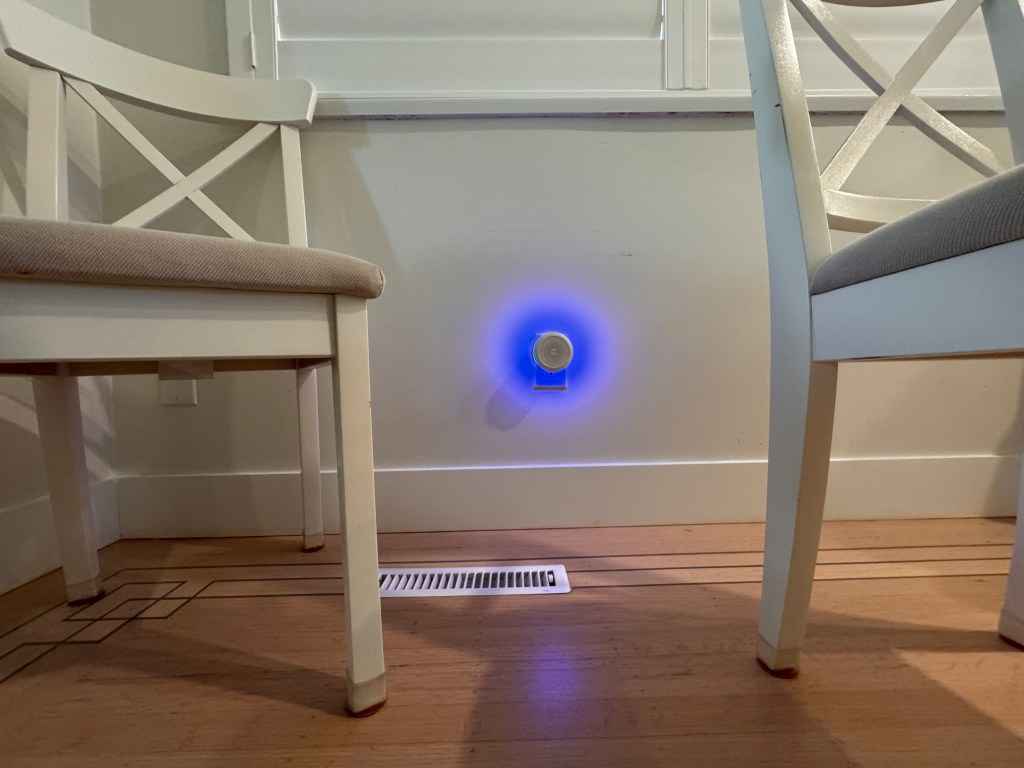
During its initial implementation, a status light adorned every room in my home. However, with the passage of time, I observed a natural consolidation and refinement of the status light setup. While several applications cater to similar purposes, I encountered challenges with using light flicks for message transmission, primarily due to issues with consistency and reliability stemming from timing inaccuracies. Consequently, I opted to optimize the system by harnessing colors for communication. Initially, I rationalized the number of status lights, reducing them to a single unit strategically positioned in the living room–a decision driven by the recognition of the practicality of having a centralized hub. Acknowledging the primary functions of our bedrooms–sleeping and occasional activities–I deemed the installation of individual status lights unnecessary. Moreover, given the necessity for connected lightbulbs and the prevalence of LED ceiling lamps, minimizing outlet usage emerged as a priority. Thus, leveraging colors as a messaging tool afforded us a versatile array of options.
A comprehensive array of color-coded notifications was established to effectively convey various household statuses:
- Green: Indicates the activation of the alarm system.
- Flickering Red: Signals a potential break-in, triggered by a window or door being opened while the alarm is active.
- Dim Orange: Signifies the activation of sleeping lights, programmed to operate automatically from 11 pm to 7 am.
- Purple: Indicates that the laundry room door has remained closed for 1.5 hours, typically corresponding to the duration of a washing cycle.
- Flickering Orange: Signals a detected leak, with leak detectors installed under sinks, faucets, and in the laundry room.
- Flickering Yellow: Indicates the ringing of the doorbell.
As new scenarios arise, the list of status indications continues to expand, prompting efforts to streamline the updating process for improved efficiency.
 Webalab
Leave a comment